Search This Blog

Thursday, March 17, 2011

LEARNING INTEGRATED SYSTEM DESIGN

LEARNING INTEGRATED SYSTEM DESIGN


While I was studying aeronautical engineering in MIT, Chennai, (1954-57) during the third year of my course, I was assigned a project to design a low-level attack aircraft together with six other colleagues. I was given the responsibility of system design and system integration by integrating the team members. Also, I was responsible for aerodynamic and structural design of the project. The other five of my team took up the design of propulsion, control, guidance, avionics and instrumentation of the aircraft. My design teacher Prof. Srinivasan, the then Director of MIT, was our guide. He reviewed the project and declared my work to be gloomy and disappointing. He didn’t lend an ear to my difficulties in bringing together data base from multiple designers. I asked for a month’s time to complete the task, since I had to get the inputs from five of my colleagues without which I cannot complete the system design. Prof. Srinivasan told me "Look, young man, today is Friday afternoon. I give you three days time. If by Monday morning I don’t get the configuration design, your scholarship will be stopped." I had a jolt in my life, as scholarship was my lifeline, without which I cannot continue with my studies. There was no other way out but to finish the task. My team felt the need for working together round the clock. We didn’t sleep that night, working on the drawing board skipping our dinner. On Saturday, I took just an hour’s break.

On Sunday morning, I was near completion, when I felt someone’s presence in my laboratory. It was Prof. Srinivasan studying my progress. After looking at my work, he patted and hugged me affectionately. He had words of appreciation: "I knew I was putting you under stress and asking you to meet a difficult deadline. You have done great job in system design”.

Through this review mechanism Prof Srinivasan, really injected the necessity of understanding the value of time by each team member and brought out engineering education has to lead system design, system integration and system management. I realized that if something is at stake, the human minds get ignited and the working capacity gets enhanced manifold. That’s what exactly happened. This is one of the techniques of building talent. The message is that young in the organization, whatever is their specialization, be trained to systems approach and projects, which will prepare them for new products, innovation and undertaking higher organizational responsibilities. Teacher has to be a coach like Prof. Srinivasan.

An interview with Kalam.


Kalam.... about Politics

1. In your opinion, what is the significance of vote? and what do you suggest to the voters in view of the Forthcoming elections ?
Ans: Vote is the privilege and responsibility of a citizen in a democracy, particularly now, when large number of youth have been included in the voter list. It is a tool of people’s power. The voters should exercise their franchise with discretion, so that the nation gets the right type of people’s representatives to serve and govern the nation and provide growth and prosperity to the citizens.

2) How do you describe an ideal candidate or the right candidate and do you think political parties fielding right candidates in elections?
Ans: Ideal candidate is one who considers nation is above himself/herself and his party. “Work with integrity and succeed with integrity” must be the motto. Political parties should field such candidates for election who have concern for the national development and passion to implement national development programmes.

3) What could be done to eliminate candidates with criminal track record as well as increasing influence of money and muscle power?
Ans: As per the representation of people (Amendment) Bill 2006, a person against whom a court of competent jurisdiction has framed charges for commission of an offence or offences, punishable with imprisonment for tenure of 7 years or more, such person shall be deemed to be disqualified for six years for contesting election from the date of framing of charges. This is definitely an improvement from the past. It is for the voter to be aware of all the conduct and characteristics of the candidate contesting for the election. They should be judicious in the selection of the right candidate. In this respect, not voting is a great injustice to the nation.

4) Do you support Dynastic politics? if so why so? if not why not?
Ans: In a democracy, people’s power is mighty and right choice is the responsibility of the voter. Right type of person who will deliver justice and development of the constituency should be the selection criteria and voting. Our aim is to become a developed nation by 2020. We have many challenges to meet this. We have to concentrate on development and politics oriented to development is crucial.

5) Who is your ideal Political leader ? Did you ever feel tempted to join politics ?
Ans: I have not been inspired so far in politics by anyone. I am very much influenced by my Primary School teacher Shri Sivasubramania Iyer and in professional career by Dr. Vikram Sarabhai and Dr. Satish Dhawan.

6) Do you agree with the contention that India is progressing?
Ans: There is no doubt about the growth of India. After the 1991, economic liberalization, India has progressed in agriculture, Pharma, industry, ICT, automobile, road transportation, air-transportation, healthcare and higher education. Definitely I can see the growth. But what is needed today, is the rural development through PURA (Providing Urban Amenities in Rural Areas) should be the focus.

7) How do you feel when people confine you to one Community? What kind of politics should be encouraged to make people rise above caste and creed and identify themselves with the nation ?
Ans. Ignorance, ignorance and ignorance.

8) You have been inviting the youth to join politics. What kind of reforms do you suggest to attract youngsters towards politics and to make them choose politics as a serious career option ?
Ans. So far I have met over 5 million youth. I have asked in every forum, how many people will join politics? The number is slowly increasing. I would like to give typical answers: Jalandhar girl said – her main aim in joining politics is to remove corruption from all levels. At Shimoga a boy said, I will enter into politics to remove castism in the country. Lucknow girl said, I will promote the vision of the nation and transform vision into missions and projects for time bound development of the nation.

9) The educational qualifications of a majority of public representatives remain pitiably low. Do you feel that some educational qualification should be prescribed for MLAs and MPs?
Ans. It is not true. Number of graduates/postgraduate and PhDs in the different Lok Sabha from independence till now is constantly increasing. Nation is working towards higher and higher levels of literacy. When the country realizes, high percentage of literacy, we will definitely have more qualified legislature and parliamentarians.

10) Though members of weaker sections like SCs and STs are getting elected on the basis of quota system, the real power continues to be concentrated in the hands of the upper classes. What should be done to ensure that the weaker sections are really empowered? You know that the situation at the level of local bodies remains even more pathetic. Though women get elected to the seats under quota system it is their husbands or brothers that really run the show? Suggest something on that.
Ans. Education, Education, Education and empowerment through the training to understand their rights.

11) Do you ever feel disturbed by the rise of corruption in public life? how can we eliminate corruption from the system?
Ans. Every right thinking citizen is disturbed. Whenever I meet children, this is one of their serious anxiety. Adichunchanagiri story.

12) Tell us an instance where you felt that the politicians have terribly let down the nation ?
Ans. If the money allotted for rural development, if it does not reach the people, it is injustice. Political leaders and the administration have to ensure that money reaches. If the water bodies are not periodically de-silted and connected and water shortage in the village, it is injustice to the rural population. If pendency of the court cases are constantly increasing without solution then it is injustice. If illiteracy in the country is not removed within a prescribed time for both male and female, then it is injustice. If the opportunity for earning capacity is not generated for the youth of the nation, then it is a injustice. If the people vote by getting money, it is injustice to themselves and the nation.

13) Do you feel the Election Commission should have more powers? What punitive powers should the Commission possess?
Ans. It will be better to have a more transparent system of selection of Election Commissioners and Chief Elections Commissioner as is being done in the case of Central Vigilance Commissioner and the Vigilance Commissioners

Monday, March 7, 2011

Kuthiyottam


Kuthiyottam is one of the main offering at the Chettikulangara Devi Temple. It is a ritualistic symbolic representation of Human Sacrifice.

Young boys between 8 to 14 years are taught Kuthiyottam, a ritual dance in the house amidst a big social gathering before the portrait of the deity. Early in the morning on Bharani, after the feast and other rituals, the boys whose body is pierced with a silver wire, one end of which is tied around his neck and an arecanut fixed on the tip of a knife held high over his head are taken in procession to the temple with the accompaniment of beating of drums, music, ornamental umbrellas, and other classical folk art forms, and richly caparisoned elephants.

All through the way to the temple tender coconut water will be continually poured on his body. After the circumambulation the boys stands at a position facing the Sreekovil (Sanctum Sanctorum) and begins to dance.

This ceremony ends with dragging the wire pierced to the skin whereby a few drops of blood comes out. Kuthiyotta Kalaris’, run by Kuthiyotta Asans (Teachers or leaders), train the group to perform the dances and songs. Normally, the training starts about one to two months before the seasonA team of artists perform this song and dance ritual.

The songs include those in praise of Durga and other deities, padapattu (war songs) and kalaripattu (martial art songs). Instrumental accompaniments are mainly percussions, ganjira, bells and chaplankatta. Faces are painted and red curtains are used as partitions on the stage Kuthiyottam is a ritual art exclusive to the Devi temples of South Kerala. A team of artists perform this song and dance ritual. The songs include those in praise of Durga and other deities, padapattu (war songs) and kalaripattu (martial art songs). Instrumental accompaniments are mainly percussions, ganjira, bells and chaplankatta.

Saturday, February 26, 2011

An Answer to the World’s Water Crisis?

Nano technology

An Answer to the World’s Water Crisis?

As the world’s population rises from 6.5 billion today to 9 billion by 2050, access to fresh water will become even more important in the near future. Unfortunately, 97 percent of the world’s water is salt water; of the remaining 3 percent, twothirds are frozen.1 As well as being scarce, the remaining 1 percent of the world’s water supply is not evenlydistributed, and this shortage is clearly a serious problem for developing countries.

The World Health Organization (WHO) has estimated2 that 80 percent of illnesses in the developing world are water related, resulting from poor waterquality and lack of sanitation. There are 3.3 milliondeaths each year from diarrheal diseases caused by E. coli, salmonella and cholera bacterial infections, and parasites and viral pathogens. In the 1990s, the number of children who died of diarrhea was greater than the sum of people killed in conflicts since World War II.

the Organization for Economic Co-operation and Development and Allianz highlighted how nanotechnologies for water treatment are expected to impact the developing world. PLoS Medicine, a policy forum for improving healthcare in society, has also identified4 the importance of improved water treatment as one of the top 10 ways nanotechnology will change lives. A third, more recent, paper also considered the top 10 ways nanotechnologies will affect us, and clean water is listed among them.5 Clearly, nanotechnologies are set to make a considerable impact on the water sector, most likely through three main areas: purification and wastewater treatment, monitoring,

and desalination.

February 28.. Indian National Science Day


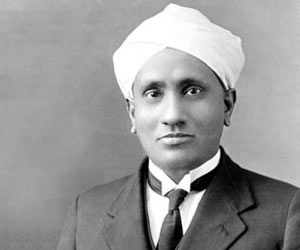
Sir C.V RAMAN


February 28, is Science Day. On that day in 1928, Sir C.V. Raman announced the discovery of the Raman Effect. For this, he was awarded the Nobel Prize for Physics in 1930. The Raman Effect led to the growth of a new discipline, Raman Spectroscopy, which has now become a powerful tool for a wide range of scientific investigations and industrial applications.

Raman was a genius. He finished school education at the age of 11 and graduated in Physics and English from the University of Madras four years later. At 17, he did his Master’s in Physics. Thereafter, he joined the Indian Audit and Accounts Service and was posted at Kolkata. But his love for Physics continued.


In 1915, he was appointed Palit Professor of Physics in the Science College of Calcutta University. In 1933, he moved to Indian Institute of Science, Bangalore, as its Director. After Independence, the Government of India appointed him the first National Professor.

Raman was a compulsive and relentless investigator. He never stopped learning and doing research. After his retirement in 1948, he established Raman Research Institute at Bangalore and continued to work there till his death on November 7, 1970.

Raman was a die-hard nationalist. He never believed that good quality research could be carried out only with foreign-made instruments. He emphasised on self-reliance in science and technology. Raman also represents an era when the facilities for education and research were very limited. Yet a large number of scientists did research work of international level. Some of them were J.C. Bose, S.N. Bose, Meghnad Saha, Homi Bhabha, P. C. Ray and Birbal Sahni. It is now being acknowledged that J. C. Bose invented wireless, not Marconi.

Need for bold initiatives

While India celebrates Science Day and remembers the contribution of Raman, it is also an opportunity to take stock of the status of science in India. Such introspection is necessary as science and technology have become the most important drivers of the economy of a nation. Information Technology and Biotechnology are two live examples of knowledge-based industry. With globalisation and the WTO in place, those countries, which do not update themselves with the latest scientific and technological advancements, would fall behind. Technology has changed the business models of companies across the world.

Since Independence, India has travelled a long distance in research and development activities. Our scientific and technical manpower is amongst the largest in the world. Two scientists of Indian origin, Hargobind Khorana and S. Chandrasekhar, have won Nobel Prizes in Medicine and Physics. It is difficult to find a good university or research institute of repute in the US, where Indians are not working at the top positions.


There are, however, a few disturbing trends which need immediate attention. First, good students, undergraduate and graduate, have started moving away from sciences — Physics, Mathematics, Chemistry and Biology. Instead, Economics, Commerce, Engineering and Medicine are the coveted subjects. Those who do join sciences keep looking for a changeover at the first opportunity to more lucrative disciplines.

Not many go willingly for doctoral programmes. Jobs in sciences are few and pay packets low. Even after Ph.D., which takes about four years, and perhaps after another few years of post-doctoral research, the best prospect is a university lectureship fetching about Rs 15,000 a month. In comparison, a clerk in a good bank or private sector organisation would be getting a better deal.

Secondly, the universities have become teaching colleges, research having taken a backseat. As a result, students of universities hardly have exposure to frontline research work; they lack motivation to take up a career in research. Those who wish to stay in sciences prefer to go to research institutes for Ph.D. By contrast, in all the advanced countries, the universities contribute to good quality research. Most Nobel Prizes have been won by university professors. In India, however, most universities have shifted undergraduate teaching to affiliated colleges. Good teachers and well-known scientists can play a crucial role in shaping up the vision of the students.


Thirdly, research institutes also need improvement. They should be made truly autonomous and professionally managed with more accountability. An effective system of rewarding good researchers should be evolved. Some institutes should be converted into research universities with small undergraduate and graduate programmes, so that they can also contribute to manpower development.


Fourthly, the view that research in basic sciences is not important as it is of little utility to India is short-sighted. Good technology cannot flourish without good science. Fifthly, the universities face acute financial crisis. Some argue that higher education should not be subsidised, the quality of teaching is not up to the mark and there is considerable wastage in the system. The universities themselves are unable to raise resources by way of increasing fee and user charges. Governments are unable to support them to the desired extent due to budgetary constraints. The result: these institutions are unable to keep pace with the changing times.

Sixthly, there is a need to look at the structure of universities, most of them being affiliating institutions. They suffer from the huge drag of the affiliated colleges. The biggest casualty is quality of education. Should we not try to move towards the system of unitary universities?

And finally, the time has come for inter-disciplinary research and education. Our university systems have become water-tight compartments within a department and people do not interact amongst themselves. We continue to promote very specialised institutions such as medical colleges, engineering colleges, agricultural universities, etc., whereas the scholars of leading institutions elsewhere are trying to collaborate with each other and promote all branches of knowledge. For instance, Massachusetts Institute of Technology is well known for Physics, Economics, Biology and Medicine!


We need to bring about reforms in higher education. Research in basic sciences and technology should be liberally funded by the government. We should allow good private universities to generate competition for government-funded universities and research institutes.

Career scientists should be paid well and working conditions improved. We need to formulate a comprehensive strategy and implement it with vigour. India should also aim for at least one Nobel Prize during the next 10 years for the work done here. Let us pledge to repeat Raman.

C.V. Raman Biography

C.V. Raman Biography


Born: November 7, 1888

Died: November 21, 1970
Achievements: He was the first Indian scholar who studied wholly in India received the Nobel Prize.

C.V. Raman is one of the most renowned scientists produced by India. His full name was
Chandrasekhara Venkata Raman. For his pioneering work on scattering of light, C.V. Raman won the Nobel Prize for Physics in 1930.

Chandrashekhara Venkata Raman was born on November 7, 1888 in Tiruchinapalli, Tamil Nadu. He was the second child of
Chandrasekhar Iyer and Parvathi Amma. His father was a lecturer in mathematics and physics, so he had an academic atmosphere at home. He entered Presidency College, Madras, in 1902, and in 1904 passed his B.A. examination, winning the first place and the gold medal in physics. In 1907, C.V. Raman passed his M.A. obtaining the highest distinctions.

During those times there were not many opportunities for scientists in India. Therefore, Raman joined the Indian Finance Department in 1907. After his office hours, he carried out his experimental research in the laboratory of the Indian Association for the Cultivation of Science at Calcutta. He carried out research in acoustics and optics.

In 1917, Raman was offered the position of Sir Taraknath Palit Professorship of Physics at Calcutta University. He stayed there for the next fifteen years. During his tenure there, he received world wide recognition for his work in optics and scattering of light. He was elected to the Royal Society of London in 1924 and the British made him a knight of the British Empire in 1929. In 1930, Sir C.V. Raman was awarded with Nobel Prize in Physics for his work on scattering of light. The discovery was later christened as "Raman Effect".

In 1934, C.V. Raman became the director of the newly established Indian Institute of Sciences in Bangalore, where two years later he continued as a professor of physics. Other investigations carried out by Raman were: his experimental and theoretical studies on the diffraction of light by acoustic waves of ultrasonic and hypersonic frequencies (published 1934-1942), and those on the effects produced by X-rays on infrared vibrations in crystals exposed to ordinary light. In 1947, he was appointed as the first National Professor by the new government of Independent India. He retired from the Indian Institute in 1948 and a year later he established the Raman Research Institute in Bangalore, where he worked till his death.

Sir C.V. Raman died on November 21, 1970.

Wednesday, January 19, 2011

Chandrasekhar--- photos

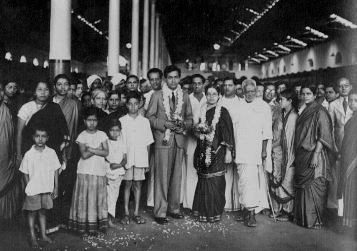
Farewell to a newly married Chandra with wife Lalitha
at the Madras railway station (1936)


Planetary Nebula


TOTAL LUNAR ECLIPSE


LUNAR HALO
In the image you can also see Mars (below the moon, out of the halo) and the star Capella (left, inside the halo).


Made by NASA's Chandra Xray Observatory


Chandra X ray Observatory

Asteroid


See Explanation.  Clicking on the picture will download   the highest resolution version available.

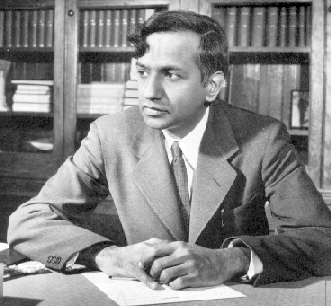
S Chandrasekhar


S Chandrasekhar ... By Sulekha Rani.R, P.G.T Chemistry ,K V NTPC Kayamkulam


Early life and education


Chandrasekhar was the third of ten children born to Sita Ayyar (née Balakrishnan) and Chandrasekhara Subrahmanya Ayyar (C.S. Ayyar), a senior officer in the Indian Audits and Accounts Department in the railway sevices, who was posted in Lahore as the Deputy Auditor General of the Northwestern Railways. Chandrasekhar's mother was devoted to intellectual pursuits and had translated Henrik Ibsen's A Doll House into Tamil. His father was an accomplished Carnatic music violinist who had authored several books on musicology. Chandrasekhar, also known as Chandra, was the nephew of Nobel-prize winning physicist C. V. Raman.
Chandra had two elder sisters, Rajalakshmi and Balaparvathi. Being the first son in the family, Chandra’s birth rejoiced his parents, for only the son preserves the family lineage, and to whom all family belongings are bequeathed. The eldest son traditionally assumes his father’s responsibilities once a grown man, and performs certain annual rituals. Following Chandra, his younger siblings included three brothers—Vishwanathan, Balakrishnan, and Ramanathan—and four sisters—Sarada, Vidya, Savitri, and Sundari. Chandrasekhar, a common Tamil name, is one of the appellations of the Hindu deity Shiva and means "holder of the moon" in Sanskrit.
At the age of six, Chandra’s family moved from Lahore to Lucknow, Uttar Pradesh, in northern India. A couple years later, C.S. Ayyar became Deputy Accountant-General in Madras, which involved a lot of travel as he was often transferred from place to place. Therefore, he settled his family at a home where they could stay while he traveled.
On Chandra’s memories of his childhood, Kameshwar C. Wali stated in Chandra: A Biography of S. Chandrasekhar, “The Ayyars’ house in Lahore was outside the city walls, not far from a large public garden known as the Lawrence Gardens. Chandra has few memories of his childhood, but he does remember frequent visits to the gardens and the Anarkali bazaar, which is even now a well-known and popular shopping place in Lahore, teeming with products from all over the world. He also distinctly remembers the beginning of the First World War in 1914, which coincided with the birth of his younger brother Balakrishnan.”
Chandrasekhar’s elder sisters remember him as a very naughty, mischievous younger brother. Wali states, “A healthy and handsome child… Chandra used to pick on his oldest sister, Rajalakshmi, by teasing her and quarreling with her over toys. “He used to take the lion’s share of everything,” recalls his sister Bala. “He would break his things first and take my elder sister’s.”
Chandra’s schooling was taken care of by his parents at his home; he officially started at the age of five, on the auspicious day of Vijayadasami. Chandra remembers, “My father used to teach me in the mornings before he went to his office, and then after he went to the office, my mother would teach me Tamil.” C.S. Ayyar hoped for Chandra to become an Indian Civil Service (ICS) officer, an esteemed position. On this subject Wali stated, “ He enjoyed learning English, and arithmetic caught his fancy very early. 'I remember very well,' he says, 'that my father used to assign lessons and exercises. I used to do far more and very often went far ahead of the assignments. I found that I could study the books on arithmetic on my own. So when my father came home, I had done one chapter (or more) ahead of what he wanted.' At first, Chandra’s father was amazed, but he and others soon realized that they had an exceptionally bright child in their midst.”
Another individual in the earlier generation of his family, his uncle Sir C.V. Raman, had exhibited brilliance himself, and even won the Nobel Prize. With this example set, Chandra was allowed to choose his own route in life; unlike Sir C.V. Raman, Chandra did not face much opposition from his family in his going away from civil service in India.
It was not until 1921, when Chandra was eleven years old, that he attended regular school. He was readily accepted into Hindu High School and skipped two years of normal high school.
Chandrasekhar attended the Hindu High School, Triplicane, Madras, British India until 1925. His first year passed by disappointingly. Having been used to taking subjects he liked (mainly English and arithmetic) at home, he did not like the requirement to also study history, geography, and general science, along with periodic examinations. The following year, Chandra was more excited, as his curriculum included algebra and geometry. Wali stated, “Without waiting for classes to begin, he began studying these subjects during summer vacation. 'I remember getting the books of my higher class,' says Chandra, 'and reading them ahead of classes. I remember reading Piorpoint’s texts on geometry; I went right through the first two books before I got into my fourth form. When I got to the fourth form, I knew all the geometry and all the algebra they were going to teach, and in fact more—permutations and combinations, solving cubic equations, and so on. Similarly in my [next three] summer vacations, I started studying conic sections, coordinate geometry, calculus, and differential equations.'”
With such great motivation, Chandra did extremely well in high school. When only fifteen, he started his studies at Presidency College until 1930, obtaining his bachelor's degree, B.Sc. (Hon.), in physics in June 1930. The principal of Presidency College, Principal Fyson, called Chandra into his office one day. Principal Fyson told Chandra that he was going to be offered a Government of India scholarship to pursue his research in England. This scholarship was created just for Chandra, and was not open for any other applicants. Chandra met with M.A. Candeth (Deputy Director of Public Instruction) and Earlam Smith (former professor of chemistry who became Director of Public Instruction) on February 12, 1930, and on the 15th, he attended an interview with Mr. Subbaroyan, Education Minister of the Madras State Government. The scholarship would be granted to him provided that Chandra agreed to serve either in the Madras state service or at the Presidency College after his return. Also, it would be awarded to him if he completed his honors course and secured the first-class grade. These stipulations were not a problem for Chandra.
During the next few months, Chandra put in all his energy to studying for the final examinations. As predicted, he secured first rank, and his grades set a new record. On May 22, 1930, Chandrasekhar was awarded the Government of India scholarship to pursue graduate studies at the University of Cambridge, where he became a research student of Professor R.H. Fowler and was admitted to Trinity College, Cambridge. On the advice of Prof. P. A. M. Dirac, Chandrasekhar spent a year at the Institut for Teoretisk Fysik in Copenhagen, where he met Prof. Niels Bohr.
In the summer of 1933, Chandrasekhar was awarded his Ph.D. degree at Cambridge. However, he faced a dilemma: in order to keep his scholarship, he must return to India and take up a position as he promised. Even his father was urging his return to India, since he had been away for three years already. Chandra, on the other hand, wanted to remain in England to continue his research. In the meantime, he applied for Fellowship at Trinity College. Professor Fowler told him of the great competition for the Fellowship, and didn’t think Chandra would be able to get in. Chandra himself greatly doubted his chances, but took the required examinations anyway. But to Chandra’s surprise, the following October, he was elected to a Prize Fellowship at Trinity College for the period 1933-37. He attempted to mollify his father, stating that by being a Fellow, his settlement in India would be much easier, as he would get much more respect from the government, and thus be able to secure a position of his liking upon his return. During his Fellowship at Trinity College, Chandra formed friendships with Sir Arthur Eddington and Professor E. A. Milne.
In September 1936, Chandrasekhar married Lalitha Doraiswamy, who he had met as a fellow student at Presidency College, Madras, and who was a year junior to him. In his Nobel autobiography, Chandrasekhar wrote, "Lalitha's patient understanding, support, and encouragement have been the central facts of my life."
Career

In the year 1935, another opportunity to settle with a solid job in India accosted Chandra. He planned to apply, but canceled his plan after hearing that his good friend S. Chowla (another Indian student he met during his first visit to Cambridge) was also a candidate. Chandra, who admired his work and personality, found it unfair to apply to a position that he may not even be able to take on time, with his other commitment to lecture in America. This disappointed his father into thinking Chandra’s chances of coming back to India had diminished greatly. However, Chandra later found that because of his uncle C.V. Raman’s influence, another scientist, Nagendra Nath, was competing against Chowla for the position that Chowla wanted so badly. In face of this event, Chandra wrote to his father, “I am so disgusted with the whole situation that my desire to settle finally in India and be of some service to Indian science seems to dwindle day by day.”
In January 1937, Chandrasekhar was recruited to the University of Chicago faculty as Assistant Professor by Dr. Otto Struve and President Robert Maynard Hutchins. Here he stayed at Williams Bay, Wisconsin, and Chandra set off on his scientific career at the Yerkes Observatory of the University of Chicago. He was to remain at the university for his entire career, becoming Morton D. Hull Distinguished Service Professor of Theoretical Astrophysics in 1952 and became a naturalized citizen of the United States in 1953. He attained emeritus status at the university in 1985.
During World War II, Chandrasekhar worked at the Ballistic Research Laboratories at the Aberdeen Proving Ground in Maryland. While there, he worked on problems of ballistics; for example, two reports from 1943 were titled, On the decay of plane shock waves and The normal reflection of a blast wave.[3]
Chandrasekhar worked continuously in one specific area of astrophysics for a number of years, then moved to another area. Consequently, his working life can be divided into distinct periods. He studied stellar structure, including the theory of white dwarfs, during the years 1929 to 1939, and subsequently focused on stellar dynamics from 1939 to 1943. Next, he concentrated on the theory of radiative transfer and the quantum theory of the negative ion of hydrogen from 1943 to 1950. This was followed by sustained work on hydrodynamic and hydromagnetic stability from 1950 to 1961. In the 1960s, he studied the equilibrium and the stability of ellipsoidal figures of equilibrium, but also general relativity. During the period, 1971 to 1983 he studied the mathematical theory of black holes, and, finally, during the late 1980s, he worked on the theory of colliding gravitational waves.
During the years 1990 to 1995, Chandrasekhar worked on a project which was devoted to explaining the detailed geometric arguments in Sir Isaac Newton's Philosophiae Naturalis Principia Mathematica using the language and methods of ordinary calculus. The effort resulted in the book Newton's Principia for the Common Reader, published in 1995.
Chandrasekhar died of heart failure in Chicago in 1995, and was survived by his wife, Lalitha Chandrasekhar. In the Biographical Memoirs of the Fellows of the Royal Society of London, R. J. Tayler wrote: "Chandrasekhar was a classical applied mathematician whose research was primarily applied in astronomy and whose like will probably never be seen again."
Nobel prize

He was awarded the Nobel Prize in Physics in 1983 for his studies on the physical processes important to the structure and evolution of stars. He was, however, upset that the citation mentioned only his earliest work, seeing this as a denigration of a lifetime of achievements. It is not certain if the Nobel selection committee was at least remotely influenced in formulating this citation by the early criticisms of Sir Arthur Stanley Eddington, another distinguished astrophysicist of his time and a senior to him. His life's achievement may be glimpsed in the footnotes to his Nobel lecture.
Legacy

Chandrasekhar's most famous success was the astrophysical Chandrasekhar limit. The limit describes the maximum mass (~1.44 solar masses) of a white dwarf star, or equivalently, the minimum mass for which a star will ultimately collapse into a neutron star or black hole (following a supernova). The limit was first calculated by Chandrasekhar while on a ship from India to Cambridge, England, where he was to study under the eminent astrophysicist, Sir Ralph Howard Fowler. When Chandrasekhar first proposed his ideas, he was opposed by the British physicist Arthur Eddington, and this may have played a part in his decision to move to the University of Chicago in the United States.
Honors

Awards
Fellow of the Royal Society (1944)
Henry Norris Russell Lectureship (1949)
Bruce Medal (1952)
Gold Medal of the Royal Astronomical Society (1953)
National Medal of Science award by President Lyndon Johnson (1967)
Henry Draper Medal (1971)
Nobel Prize in Physics (1983)
Copley Medal, the highest honor of the Royal Society (1984)
Named after him
In 1999, NASA named the third of its four "Great Observatories'" after Chandrasekhar. This followed a naming contest which attracted 6,000 entries from fifty states and sixty-one countries. The Chandra X-ray Observatory was launched and deployed by Space Shuttle Columbia on July 23, 1999.
The Chandrasekhar number, an important dimensionless number of magnetohydrodynamics, is named after him.
The asteroid 1958 Chandra is also named after Chandrasekhar.