Search This Blog

Saturday, July 7, 2012

New Uniform Design in KV from 2012-13

KV - New Uniform - from 2012 onwards

KV New Uniform Belt and Shoes for all

KV+Uniform+Fabric+Colour+Type
KV New Uniform Pattern Fabric and colour type

KV+Uniform+Scarf+Turban+Ribbon
KV New Uniform Pattern for Scarf Turban and ribbon

KV+Uniform+Socks+Pattern+All
KV New Uniform Socks Pattern for Boy and Girl
 KV+Sportswear+Uniform+Boy+Girl

KV New Sportswear Uniform Pattern for Boy and Girl
 KV+Sportswear+Uniform+Boy+Girl

KV New Sportswear Uniform for Boy and Girl View
 KV+Summer+Uniform+Junior+Boy

KV New Summer Uniform for Junior Boy

KV+Summer+Uniform+Junior+Boy1 
KV New Summer Uniform for Junior Boy View

 
KV New Summer Uniform for Middle and Senior VI-XII class

KV New Summer Uniform for Middle and Senior VI-XII class view

 
KV New Summer Uniform for Junior Girl Class I-II

 
KV New Summer Uniform for Junior Girl Class I-II View

KV New Summer Uniform for Girl Middle Class III-VIII

KV New Summer Uniform for Girl Middle Class III-VIII View


KV New Summer Uniform for Senior Girl Class IX-XII


K

Thursday, July 5, 2012

Higgs Boson...Picture gallery.. 4-july-2012


Sulekha Rani.R ,PGT Chemistry,KV NTPC Kayamkulam


Higgs Boson...New Innovation... 4 July-2012

 Sulekha Rani.R ,PGT Chemistry,KV NTPC Kayamkulam

Higgs within reach….

Our understanding of the universe is about to change…


(A proton-proton collision event in the CMS experiment producing two high-energy photons (red towers). This is what we would expect to see from the decay of a Higgs boson but it is also consistent with background Standard Model physics processes. © CERN 2012)


Event display showing particle tracks from a collision as seen by the CMS experiment


The ATLAS and CMS experiments at CERN today presented their latest results in the search for the long-sought Higgs boson. Both experiments see strong indications for the presence of a new particle, which could be the Higgs boson, in the mass region around 126 gigaelectronvolts (GeV).
The experiments found hints of the new particle by analysing trillions of proton-proton collisions from the Large Hadron Collider (LHC) in 2011 and 2012. TheStandard Model of particle physics predicts that a Higgs boson would decay into different particles – which the LHC experiments then detect.
Both ATLAS and CMS gave the level of significance of the result as 5 sigma on the scale that particle physicists use to describe the certainty of a discovery. One sigma means the results could be random fluctuations in the data, 3 sigma counts as an observation and a 5-sigma result is a discovery. The results presented today are preliminary, as the data from 2012 is still under analysis. The complete analysis is expected to be published around the end of July.


Press Release…. 
CERN experiments observe particle consistent with long-sought Higgs boson
Geneva, 4 July 2012. At a seminar held at CERN today as a curtain raiser to the year’s major particle physics conference, ICHEP2012 in Melbourne, the ATLAS and CMS experiments presented their latest preliminary results in the search for the long sought Higgs particle. Both experiments observe a new particle in the mass region around 125-126 GeV.
“We observe in our data clear signs of a new particle, at the level of 5 sigma, in the mass region around 126 GeV. The outstanding performance of the LHC and ATLAS and the huge efforts of many people have brought us to this exciting stage,” said ATLAS experiment spokesperson Fabiola Gianotti, “but a little more time is needed to prepare these results for publication.”
"The results are preliminary but the 5 sigma signal at around 125 GeV we’re seeing is dramatic. This is indeed a new particle. We know it must be a boson and it’s the heaviest boson ever found,” said CMS experiment spokesperson Joe Incandela. “The implications are very significant and it is precisely for this reason that we must be extremely diligent in all of our studies and cross-checks."
“It’s hard not to get excited by these results,” said CERN Research Director Sergio Bertolucci. “ We stated last year that in 2012 we would either find a new Higgs-like particle or exclude the existence of the Standard Model Higgs. With all the necessary caution, it looks to me that we are at a branching point: the observation of this new particle indicates the path for the future towards a more detailed understanding of what we’re seeing in the data.”
The results presented today are labelled preliminary. They are based on data collected in 2011 and 2012, with the 2012 data still under analysis.  Publication of the analyses shown today is expected around the end of July. A more complete picture of today’s observations will emerge later this year after the LHC provides the experiments with more data.
The next step will be to determine the precise nature of the particle and its significance for our understanding of the universe. Are its properties as expected for the long-sought Higgs boson, the final missing ingredient in the Standard Model of particle physics? Or is it something more exotic? The Standard Model describes the fundamental particles from which we, and every visible thing in the universe, are made, and the forces acting between them. All the matter that we can see, however, appears to be no more than about 4% of the total. A more exotic version of the Higgs particle could be a bridge to understanding the 96% of the universe that remains obscure.
“We have reached a milestone in our understanding of nature,” said CERN Director General Rolf Heuer. “The discovery of a particle consistent with the Higgs boson opens the way to more detailed studies, requiring larger statistics, which will pin down the new particle’s properties, and is likely to shed light on other mysteries of our universe.”
Positive identification of the new particle’s characteristics will take considerable time and data. But whatever form the Higgs particle takes, our knowledge of the fundamental structure of matter is about to take a major step forward.

(((((About CERN…CERN, the European Organization for Nuclear Research, is the world's leading laboratory for particle physics. It has its headquarters in Geneva. At present, its Member States are Austria, Belgium, Bulgaria, the Czech Republic, Denmark, Finland, France, Germany, Greece, Hungary, Italy, the Netherlands, Norway, Poland, Portugal, Slovakia, Spain, Sweden, Switzerland and the United Kingdom. Romania is a candidate for accession. Israel and Serbia are Associate Members in the pre-stage to Membership. India, Japan, the Russian Federation, the United States of America, Turkey, the European Commission and UNESCO have Observer status.)))))

The Large Hadron Collider.... LHC

The Large Hadron Collider --- LHC

Our understanding of the Universe is about to change...

 Sulekha Rani R,PGT Chemistry,KV NTPC Kayamkulam 


The Large Hadron Collider (LHC) is a gigantic scientific instrument near Geneva, where it spans the border between Switzerland and France about 100m underground. It is a particle accelerator used by physicists to study the smallest known particles – the fundamental building blocks of all things. It will revolutionise our understanding, from the minuscule world deep within atoms to the vastness of the Universe.
Two beams of subatomic particles called "hadrons" – either protons or lead ions – travel in opposite directions inside the circular accelerator, gaining energy with every lap. Physicists use the LHC to recreate the conditions just after the Big Bang, by colliding the two beams head-on at very high energy. Teams of physicists from around the world then analyse the particles created in the collisions using special detectors in a number of experiments dedicated to the LHC.
There are many theories as to what will result from these collisions. For decades, the Standard Model of particle physics has served physicists well as a means of understanding the fundamental laws of Nature, but it does not tell the whole story. Only experimental data using the high energies reached by the LHC can push knowledge forward, challenging those who seek confirmation of established knowledge, and those who dare to dream beyond the paradigm


How the LHC works

The LHC, the world’s largest and most powerful particle accelerator, is the latest addition to CERN’s accelerator complex. It mainly consists of a 27-kilometre ring of superconducting magnets with a number of accelerating structures to boost the energy of the particles along the way.
Inside the accelerator, two beams of particles travel at close to the speed of light with very high energies before colliding with one another. The beams travel in opposite directions in separate beam pipes – two tubes kept at ultrahigh vacuum. They are guided around the accelerator ring by a strong magnetic field, achieved using superconducting electromagnets. These are built from coils of special electric cable that operates in a superconducting state, efficiently conducting electricity without resistance or loss of energy. This requires chilling the magnets to about ‑271°C – a temperature colder than outer space. For this reason, much of the accelerator is connected to a distribution system of liquid helium, which cools the magnets, as well as to other supply services.
Thousands of magnets of different varieties and sizes are used to direct the beams around the accelerator. These include 1232 dipole magnets of 15m length which are used to bend the beams, and 392 quadrupole magnets, each 5–7m long, to focus the beams. Just prior to collision, another type of magnet is used to "squeeze" the particles closer together to increase the chances of collisions. The particles are so tiny that the task of making them collide is akin to firing needles from two positions 10km apart with such precision that they meet halfway!
The CERN Control CentreAll the controls for the accelerator, its services and technical infrastructure are housed under one roof at the CERN Control Centre. From here, the beams inside the LHC are made to collide at four locations around the accelerator ring, corresponding to the positions of theparticle detectors.


 Model of an LHC superconducting dipole magnet


Heavy-ion... at the LHC

 Preparation for injection in the LINAC 3 of the LEAD source material used to create heavy ions for the LHC.

 Thumbnail CERN-AC-1011246 tirage 01

In the LHC heavy-ion programme, beams of heavy nuclei ("ions") collide at energies up to 30 times higher than in previous laboratory experiments. In these heavy-ion collisions, matter is heated to more than 100,000 times the temperature at the centre of the Sun, reaching conditions that existed in the first microseconds after the Big Bang. The aim of the heavy-ion programme at the LHC is to produce this matter at the highest temperatures and densities ever studied in the laboratory, and to investigate its properties in detail. This is expected to lead to basic new insights into the nature of the strong interaction between fundamental particles.
The strong interaction is the fundamental force that binds Nature's elementary particles, called quarks, into bigger objects such as protons and neutrons, which are themselves the building blocks of the atomic elements. Much is known today about the mechanism with which the elementary force-carriers of the strong interaction, the gluons, bind quarks together into protons and neutrons. However, two aspects of the strong interaction remain particularly intriguing.
First, no quark has ever been observed in isolation: quarks and gluons seem to be confined permanently inside composite particles, such as protons and neutrons. Second, protons and neutrons contain three quarks, but the mass of these three quarks accounts for only one percent of the total mass of a proton or neutron. So while the Higgs mechanism could give rise to the masses of the individual quarks, it cannot account for most of the mass of ordinary matter.
The current theory of strong interactions, called quantum chromodynamics, predicts that at very high temperatures, quarks and gluons are deconfined and can exist freely in a new state of matter known as the quark-gluon plasma. Theory also predicts that at the same temperature, the mechanism that is responsible for giving composite particles most of their mass ceases to act.
In the LHC heavy-ion programme, three experiments – ALICE, ATLAS and CMS – aim to produce and study this extreme, high-temperature phase of matter and provide novel access to the question of how most of the mass of visible matter in the Universe was generated in the first microseconds after the Big Bang.


The LHC experiments

 A worker inside the LHC tunnel


The six experiments at the LHC are all run by international collaborations, bringing together scientists from institutes all over the world. Each experiment is distinct, characterised by its unique particle detector.
The two large experiments, ATLAS and CMS, are based on general-purpose detectors to analyse the myriad of particles produced by the collisions in the accelerator. They are designed to investigate the largest range of physics possible. Having two independently designed detectors is vital for cross-confirmation of any new discoveries made.
Two medium-size experiments, ALICE and LHCb, have specialised detectors for analysing the LHC collisions in relation to specific phenomena.
Two further experiments, TOTEM and LHCf, are much smaller in size. They are designed to focus on "forward particles" (protons or heavy ions). These are particles that just brush past each other as the beams collide, rather than meeting head-on.
The ATLAS, CMS, ALICE and LHCb detectors are installed in four huge underground caverns located around the ring of the LHC. The detectors used by the TOTEM experiment are positioned near the CMS detector, whereas those used by LHCf are near the ATLAS detector.

What is Higgs boson


 John Ellis answer the question What is the Higgs boson? in preparation for the press conference following the seminar on LHC 2012 results on the Higgs boson searches, due on July 4 2012 at CERN


By Sulekha Rani.R ,PGT Chemistry , KV NTPC Kayamkulam 

 Higgs boson
The Standard Model successfully describes all of the elementary particles we know to exist and how they interact with one another. But our understanding of nature is incomplete. In particular, the Standard Model cannot answer one basic question: Why do most of these elementary particles have masses?
Without mass, the universe would be a very different place. For example, if the electron had no mass, there would be no atoms. Hence there would be no ordinary matter as we know it, no chemistry, no biology and no people. In addition, the Sun shines thanks to a delicate interplay among the fundamental forces of nature, which would be completely upset if some of those force particles did not have large masses.
At first sight the concept of mass seems not to fit into the Standard Model of particle physics. Two of the forces the model describes – electromagnetism and the weak nuclear force – can be described by a single theory, that of the electroweak force. Scientists have subjected the electroweak theory to many experimental tests, which it has passed with flying colours. However, the basic equations of the theory seem to require all elementary particles to be massless.
Scientists needed a way out of this conundrum. Several physicists, including Peter Higgs, discovered a mechanism that, if added to the equations, would allow particles to have masses. This is now known as the Higgs mechanism. Integrating it into the Standard Model allowed scientists to make predictions of various quantities, including the mass of the heaviest known particle, the top quark. Experimentalists found this particle just where equations using the Higgs mechanism predicted it should be.
According to theory, the Higgs mechanism works as a medium that exists everywhere in space. Particles gain mass by interacting with this medium. Peter Higgs pointed out that the mechanism required the existence of an unseen particle, which we now call the Higgs boson. The Higgs boson is the fundamental component of the Higgs medium, much as the photon is the fundamental component of light.
The Higgs boson is the only particle predicted by the Standard Model that has not yet been seen by experiments. The Higgs mechanism does not predict the mass of the Higgs boson itself but rather a range of masses. Fortunately, the Higgs boson would leave a unique particle footprint depending on its mass. So scientists know what to look for and would be able to calculate its mass from the particles they saw in the detector.
Experimentalists might find that the Higgs boson is different from the simplest version the Standard Model predicts. Many theories that describe physics beyond the Standard Model, such as supersymmetry and composite models, suggest the existence of a zoo of new particles, including different kinds of Higgs bosons. If any of these scenarios turn out to be true, finding the Higgs boson could be a gateway to discovering new physics, such as superparticles or dark matter. On the other hand, finding no Higgs boson at the LHC would give credence to another class of theories that explain the Higgs mechanism in different ways.


Saturday, June 2, 2012

Pondicherry

Pondicherry --- The Peaceful  Union Territory  Slideshow: Sulekha’s trip from Pondicherry, Union Territory of Pondicherry, India to Auroville was created by TripAdvisor. See another Auroville slideshow. Create your own stunning free slideshow from your travel photos.

Thursday, May 24, 2012

World's smallest artificial heart

World's smallest artificial heart


Italian doctors have saved the life of a 16-month-old boy by implanting the world's smallest artificial heart to keep the infant alive until a donor was found for a transplant.The doctors at Rome's Bambino Gesu hospital said the operation was carried out last month and made public this week. The baby, whose identity has not been disclosed, was kept alive for 13 days before the transplant and is now doing well.The baby was suffering from dilated myocardiopathy, a heart muscle disease which normally causes stretched or enlarged fibers of the heart. The disease gradually makes the heart weaker, stopping its ability to pump blood effectively."This is a milestone," surgeon Antonio Amodeo told Reuters television, adding that while the device was now used as bridge leading to a transplant, in the future it could be permanent.The tiny titanium pump weighs only 11 grams and can handle a blood flow of 1.5 liters a minute. An artificial heart for adults weighs 900 grams.The hospital needed special permission from Jarvik and the Italian health ministry before going ahead with the procedure.(REUTERS)


(An Italian heart surgeon holds a tiny titanium pump, the world's smallest artificial heart, which was implanted in a baby, at the Bambino Gesu' Hospital in Rome May 24, 2012. Doctors from Rome's Bambino Gesu' Hospital saved the life of the 16-month-old baby in March with the artificial heart, which weighs only 11 grams, before the infant received an organ donation. REUTERS/Alessandro Bianchi)


(Italian heart surgeon Antonio Amodeo holds a tiny titanium pump, the world's smallest artificial heart,)


Sunday, April 22, 2012

Earth Day: The History of A Movement
                                               Sulekha Rani.R, PGT Chemistry

Each year, Earth Day -- April 22 -- marks the anniversary of what many consider the birth of the modern environmental movement in 1970.

File:Earth flag PD.jpg
Earth Day Flag By John McConnell-- The blue marble on Blue field..

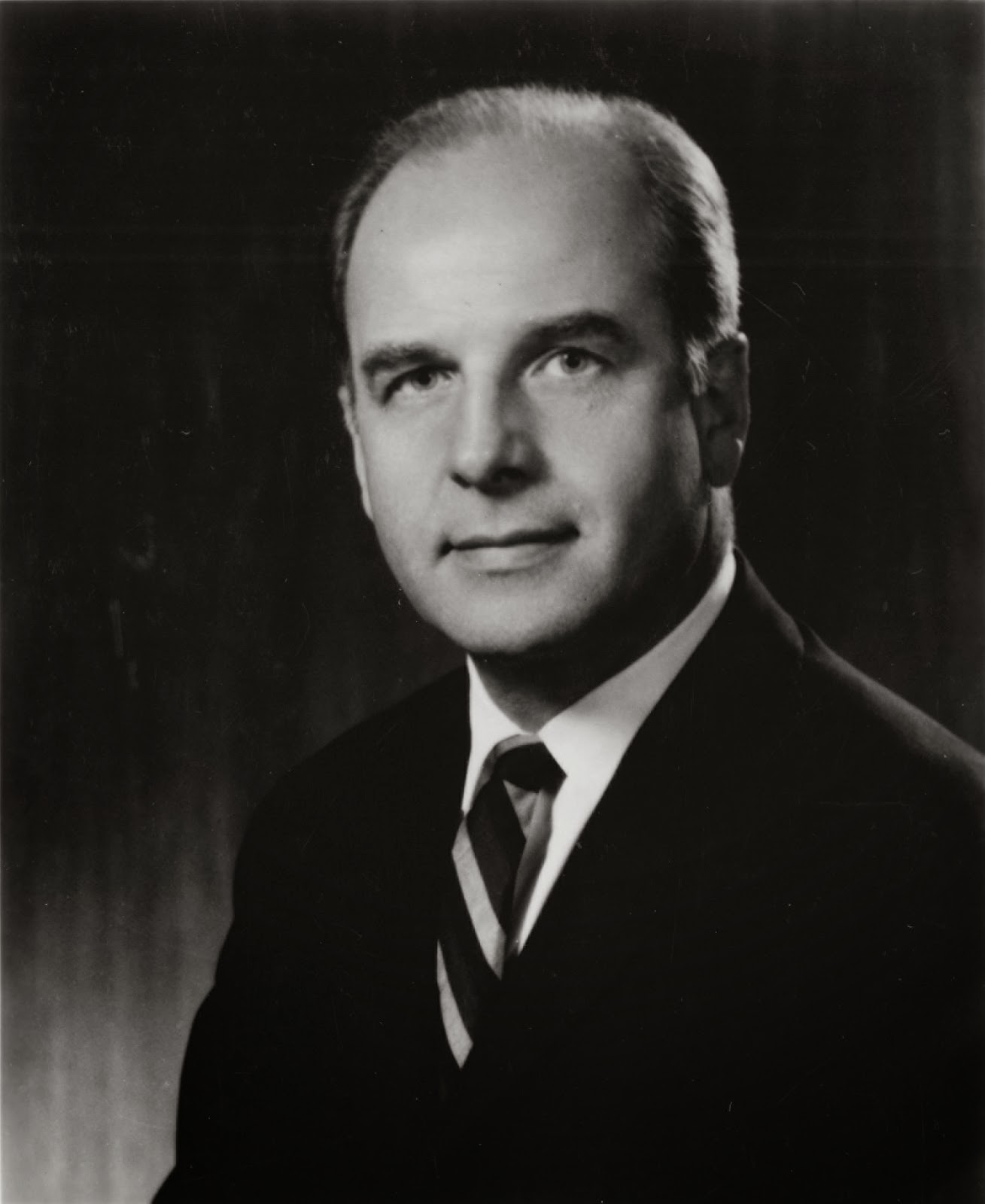
Gaylord Anton Nelson (June 4, 1916 – July 3, 2005) was an American politician from Wisconsin who served as a United States Senator andgovernor. A Democrat, he was the principal founder of Earth Day.

     
The height of hippie and flower-child culture in the United States, 1970 brought the death of Jimi Hendrix, the last Beatles album, and Simon & Garfunkel’s “Bridge Over Troubled Water”. Protest was the order of the day, but saving the planet was not the cause. War raged in Vietnam, and students nationwide increasingly opposed it.
At the time, Americans were slurping leaded gas through massive V8 sedans. Industry belched out smoke and sludge with little fear of legal consequences or bad press. Air pollution was commonly accepted as the smell of prosperity. “Environment” was a word that appeared more often in spelling bees than on the evening news.  Although mainstream America remained oblivious to environmental concerns, the stage had been set for change by the publication of Rachel Carson's New York Times bestseller Silent Spring in 1962.  The book represented a watershed moment for the modern environmental movement, selling more than 500,000 copies in 24 countries and, up until that moment, more than any other person, Ms. Carson raised public awareness and concern for living organisms, the environment and public health.
Earth Day 1970 capitalized on the emerging consciousness, channeling the energy of the anti-war protest movement and putting environmental concerns front and center. 
The idea came to Earth Day founder Gaylord Nelson, then a U.S. Senator from Wisconsin, after witnessing the ravages of the 1969 massive oil spill in Santa Barbara, California. Inspired by the student anti-war movement, he realized that if he could infuse that energy with an emerging public consciousness about air and water pollution, it would force environmental protection onto the national political agenda. Senator Nelson announced the idea for a “national teach-in on the environment” to the national media; persuaded Pete McCloskey, a conservation-minded Republican Congressman, to serve as his co-chair; and recruited Denis Hayes as national coordinator. Hayes built a national staff of 85 to promote events across the land.
As a result, on the 22nd of April, 20 million Americans took to the streets, parks, and auditoriums to demonstrate for a healthy, sustainable environment in massive coast-to-coast rallies. Thousands of colleges and universities organized protests against the deterioration of the environment. Groups that had been fighting against oil spills, polluting factories and power plants, raw sewage, toxic dumps, pesticides, freeways, the loss of wilderness, and the extinction of wildlife suddenly realized they shared common values.
Earth Day 1970 achieved a rare political alignment, enlisting support from Republicans and Democrats, rich and poor, city slickers and farmers, tycoons and labor leaders. The first Earth Day led to the creation of the United States Environmental Protection Agency and the passage of the Clean Air, Clean Water, andEndangered Species Acts. "It was a gamble," Gaylord recalled, "but it worked."
As 1990 approached, a group of environmental leaders asked Denis Hayes to organize another big campaign. This time, Earth Day went global, mobilizing 200 million people in 141 countries and lifting environmental issues onto the world stage. Earth Day 1990 gave a huge boost to recycling efforts worldwide and helped pave the way for the 1992 United Nations Earth Summit in Rio de Janeiro. It also prompted President Bill Clinton to award Senator Nelson the Presidential Medal of Freedom (1995) -- the highest honor given to civilians in the United States -- for his role as Earth Day founder.
As the millennium approached, Hayes agreed to spearhead another campaign, this time focused on global warming and a push for clean energy. With 5,000 environmental groups in a record 184 countries reaching out to hundreds of millions of people, Earth Day 2000 combined the big-picture feistiness of the first Earth Day with the international grassroots activism of Earth Day 1990. It used the Internet to organize activists, but also featured a talking drum chain that traveled from village to village in Gabon, Africa, and hundreds of thousands of people gathered on the National Mall in Washington, DC. Earth Day 2000 sent world leaders the loud and clear message that citizens around the world wanted quick and decisive action on clean energy.
Much like 1970, Earth Day 2010 came at a time of great challenge for the environmental community. Climate change deniers, well-funded oil lobbyists, reticent politicians, a disinterested public, and a divided environmental community all contributed to a strong narrative that overshadowed the cause of progress and change. In spite of the challenge, for its 40th anniversary, Earth Day Network reestablished Earth Day as a powerful focal point around which people could demonstrate their commitment. Earth Day Network brought 225,000 people to the National Mall for a Climate Rally, amassed 40 million environmental service actions toward its 2012 goal of A Billion Acts of Green®, launched an international, 1-million tree planting initiative with Avatar director James Cameron and tripled its online base to over 900,000 community members.
The fight for a clean environment continues in a climate of increasing urgency, as the ravages of climate change become more manifest every day. We invite you to be a part of Earth Day and help write many more victories and successes into our history. Discover energy you didn't even know you had. Feel it rumble through the grassroots under your feet and the technology at your fingertips. Channel it into building a clean, healthy, diverse world for generations to come

Wednesday, March 21, 2012

New Method for Cleaning Up Nuclear Waste


New Method for Cleaning Up Nuclear Waste

Sulekha Rani.R PGT Chemistry,KV NTPC Kayamkulam


(NDTB-1) as a crystalline compound that can be tailored to safely absorb radioactive ions from nuclear waste streams. (Credit: Image courtesy of University of Notre Dame)


A new paper by researchers at the University of Notre Dame, led by Thomas E. Albrecht-Schmitt, professor of civil engineering and geological sciences and concurrent professor of chemistry and biochemistry, showcases Notre Dame Thorium Borate-1 (NDTB-1) as a crystalline compound that can be tailored to safely absorb radioactive ions from nuclear waste streams. Once captured, the radioactive ions can then be exchanged for higher-charged species of a similar size, recycling the material for re-use.

If one considers that the radionuclide technetium (99Tc) is present in the nuclear waste at most storage sites around the world, the math becomes simple. There are more than 436 nuclear power plants operating in 30 countries; that is a lot of nuclear waste. In fact, approximately 305 metric tons of 99Tc were generated from nuclear reactors and weapons testing from 1943 through 2010. Its safe storage has been an issue for decades.

"The framework of the NDTB-1 is key," says Albrecht-Schmitt. "Each crystal contains a framework of channels and cages featuring billions of tiny pores, which allow for the interchange of anions with a variety of environmental contaminants, especially those used in the nuclear industry, such as chromate and pertechnetate."


Albrecht-Schmitt's team has concluded successful laboratory studies using the NDTB-1 crystals, during which they removed approximately 96 percent of 99Tc. Additional field tests conducted at the Savannah River National Laboratory in Aiken, S.C., and discussed in the paper have shown that the Notre Dame compound successfully removes 99Tc from nuclear waste and also exhibits positive exchange selectivity for greater efficiency.

reference....
http://www.nd.edu/

Monday, March 19, 2012

wedding 01-01-2011

Wedding Slideshow: Sulekhanisanth’s trip to Kerala, India was created by TripAdvisor. See another Kerala slideshow. Create your own stunning slideshow with our free photo slideshow maker.

Osaka Aquarium

Sulekha Rani R , PGT Chemistry, KV NTPC Kayamkulam

Osaka Aquarium - Japan Slideshow: Sulekha’s trip from Kerala, India to 2 cities Osaka and Osaka was created by TripAdvisor. See another Japan slideshow. Take your travel photos and make a slideshow for free.

Monday, December 5, 2011

Periodic table to welcome two new elements.. Lv and Fl

Periodic table to welcome two new elements - Lv and Fl

Article by Sulekha Rani.R ,PGT Chemistry, KV NTPC Kayamkulam

New Chemical Elements Honor Livermore Lab and Russia's Flerov Lab.....

Livermorium (Lv)and flerovium (Fl) could soon occupy the 114 and 116 spots on the periodic table of the elements. The names for the elements, which were synthesized a decade ago, were announced Thursday by the International Union of Pure and Applied Chemistry.


Chemistry's periodic table can now welcome livermorium and flerovium, two newly named elements, which were announced Thursday (Dec. 1) by the International Union of Pure and Applied Chemistry. The new names will undergo a five-month public comment period before the official paperwork gets processed and they show up on the table.

The newly named elements fit in the 114 and 116 spots, down in the lower-right corner of the periodic table, and were officially accepted to the periodic table back in June. They originally were synthesized more than 10 years ago, after which repeat experiments led to their confirmation.

Elements 113, 115, 117 and 118 have also been synthesized at Russia's Joint Institute for Nuclear Research, located in Dubna, Russia (about two hours drive from Moscow), but their creation hasn't been confirmed by the International Union yet. Once they have been confirmed, they will also have to go through the naming and public-commenting periods.

Both livermorium and flerovium were also synthesized at the same Russian lab, where Russian researchers were working with American researchers from the Lawrence Livermore National Laboratory in California.

Element 114, previously known as ununquadium, has been named flerovium (Fl), after the Russian institute's Flerov Laboratory of Nuclear Reactions founder, which similarly is named in honor of Georgiy Flerov (1913-1990), a Russian physicist. Flerov's work and his writings to Joseph Stalin led to the development of the USSR's atomic bomb project.

The researchers got their first glimpse at flerovium after firing calcium ions at a plutonium target.

Element 116, which was temporarily named ununhexium, almost ended up with the name moscovium in honor of the region (called an oblast, similar to a province or state) of Moscow, where the research labs are located. In the end, it seems the American researchers won out and the team settled on the name livermorium (Lv), after the national labs and the city of Livermore in which they are located. That is the Lawrence Livermore National Laboratory in California. Livermorium was first observed in 2000, when the scientists created it by mashing together calcium and curium.

"Proposing these names for the elements honors not only the individual contributions of scientists from these laboratories to the fields of nuclear science, heavy-element research, and super-heavy-element research.


If you do not like them, now is the time to voice your objections. The chemistry union will have a five-month comment period open to anyone.