Search This Blog

Thursday, May 19, 2011

ആദാമിന്റെ മകൻ അബു

By Sulekha Rani.R


ആദാമിന്റെ മകൻ അബു( Adaminte makan Abu) is a national award winning film in Malayalam. The film bagged the awards for the best feature film, best actor , best cinematography and best background score for 2010. Salim Kumar won the National Award for Best Actor (2010).

The film is about Abu (Salim Kumar), who has been dreaming of performing the holy pilgrimage to Mecca, despite severe financial constraints.Salim Kumar as an old vendor selling Yunani medicines and Athar, roaming around the streets of Malabar. The movie chronicles the difficulties that the old poor couples of Malabar encounter to go for a much hoped Hajj pilgrimage. This is the first time the actor is honoured in the national level, though he has made some promising perrformances in the past in movies like [Achanurangaatha Veedu]..

Director : Salim Ahmed

Written By Salim Ahmed

Music By Ramesh Narayanan

Cinematography By Madhu Ambattu

Editted By Vijay Sankar

Release 2011

Country India

Language Malayalam

Casting : Salim Kumar, Zarina Wahab, Mukesh,kalabhavan mani,Nedumudi venu,Mala aravindan,Suraj venjaramood,Thambi antony


Saturday, May 14, 2011

Science is Borderless

Sulekha Rani.R, P.G.T Chemistry, KV NTPC kayamkulam

Prof. Bert Sakmann - a German medical doctor and a research scientist who in 1991, together with German Physicist won the Nobel Prize for medicine for research into basic cell function and for their development of the patch-clamp technique. This technique conclusively established the existence of characteristic set of ion (+ve and –ve) channels in cell membranes, that in turn established the role it plays in diseases like diabetes, cardiac, epilepsy and certain neuromuscular disorder.


Prof Bert Sakmann who did his elementary education in a rural background had a passion for Physics and Engineering in school days. He got interested in Cybernetics in the final year school, since he realized that living organisms could be understood in engineering terms. Thus, the seed of inter-disciplinary research was firmly rooted in him in a very young age. He enrolled himself for medical education. After foundation courses in bio-chemistry and physiology, he did his doctoral thesis in electro physiology. He attended medical schools in Freiburg, Berlin and Paris. As a doctoral student, he worked on electro-physiological basis of pattern recognition. For this, he closely worked with electrical and computer scientists. He learnt the basic mechanism of vision. Later, he ran his own laboratory in physiology in close collaboration with physio-chemical and bio-chemical departments. In his own words, he enjoyed working with fellow scientists on scientific adventures.

Now, here we can find a doctor and a researcher with the capability of working in multiple laboratories simultaneously and becoming a team scientist, sharing the research, sharing the work and sharing the rewards too. He is the real example for “Science is borderless”.

C V Raman - his value to Science

(Sulekha Rani.R, P.G.T Chemistry, KV NTPC Kayamkulam)

Sir CV Raman –a Nobel Laureate in Physics for discovering Raman Effect. Raman gives the view that the color of sky is blue due to molecular diffraction, which determines the observed luminosity, and in great measures also its color. This led to the birth of the Raman Effect. Raman was in the first batch of Bharat Ratna Award winners. The award ceremony was to take place in the last week of January, soon after the Republic Day celebrations of 1954. The then President Dr. Rajendra Prasad wrote to Raman inviting him to be the personal guest in the Rashtrapati Bhavan, when Raman came to Delhi for the award ceremony. Sir CV Raman wrote a polite letter, regretting his inability to go. Raman had a noble reason for his inability to attend the investiture ceremony. He explained to the President that he was guiding a Ph.D. student and that thesis was positively due by the last day of January. The student was valiantly trying to wrap it all up and Raman felt, he had to be by the side of the research student, see that the thesis was finished, sign the thesis as the guide and then have it submitted.

Here was a scientist who gave up the pomp of a glittering ceremony associated with the highest honour, because he felt that his duty required him to be by the side of the student. It is this unique trait of giving value to science that builds science.

Nobel Glory To India (physics ,Chemistry and medicine)


Sulekha Rani.R, P.G.T Chemistry. KV NTPC Kayamkulam

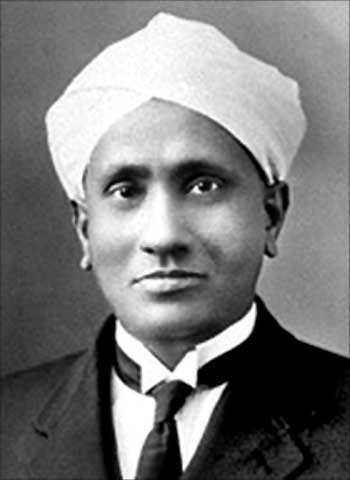
CV Raman - Physics Nobel, 1930


Chandrasekhara Venkata Raman won the 1930 Nobel Prize in Physics for his work on the scattering of light and for the discovery of the effect named after him.

Raman made, in 1928, the unexpected and highly surprising discovery that the scattered light showed not only the radiation that derived from the primary light but also a radiation that contained other wavelengths, which were foreign to the primary light.

Raman investigated the universal character of the phenomenon by using a large number of substances as a scattering medium, and everywhere found the same effect.

The explanation of this phenomenon, which has received the name of the "Raman effect" after its discoverer, has been found by Raman himself with the help of the modern conception of the nature of light.

According to that conception, light cannot be emitted from or absorbed by material otherwise than in the form of definite amounts of energy or what are known as "light quanta".

Thus the energy of light would possess a kind of atomic character. A quantum of light is proportionate to the frequency of rays of light, so that in the case of a frequency twice as great, the quanta of the rays of light will also be twice as great.


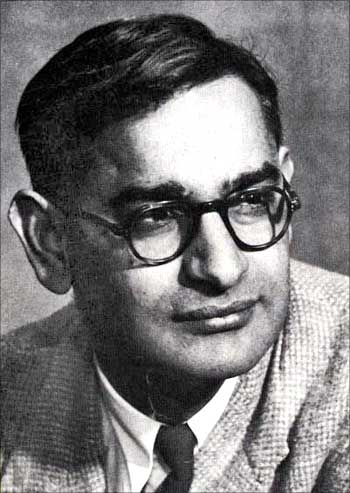
Har Gobind Khorana - Medicine Nobel, 1968


Har Gobind Khorana won the 1968 Nobel Prize in Medicine for his interpretation of the genetic code and its function in protein synthesis. He shared this award with American scientists Robert W. Holley and Marshall W Nirenberg.

An American molecular biologist of Indian Punjabi origin, Dr. Khorana was responsible for producing the first man made gene in his laboratory.

His work helped bring closer the day when synthetic DNA may be introduced into the defective human tissues to bring about their repair or treat mentally retarded people and change them into more intelligent and healthy human beings.

His synthesis of RNA, capable of replication in laboratory, was a step towards the creation of life artificially. In fact, the researches opened up a new branch called Genetic Engineering in Science.

The biological language is common to all living organisms. Dr Khorana and his team had established that the mother of all codes is spelled out in three-letter words. He was also the first to synthesize oligonucleotides, that is, strings of nucleotides.


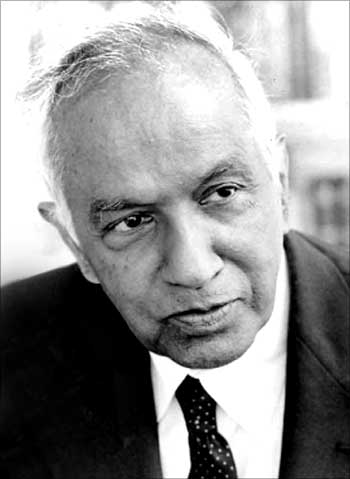
S Chandrasekhar - Physics Nobel, 1983


Subrahmanyan Chandrasekhar was awarded the 1983 Nobel Prize in Physics for his theoretical studies of the physical processes of importance to the structure and evolution of the stars.

He was the first to show how the fate of a star lies in its own birth mass. On a long sea voyage from India to England in 1930, Chandrasekhar passed the time by developing a theory that proposed that a stable white dwarf couldn't be the fate of stars above a certain critical mass.

According to his calculations, stars more than 1.4 times the mass of the Sun, which became known as the Chandrasekhar limit, must collapse under the force of their own weight, and be destined for a more spectacular fate.

If the original star was up to 2-3 times the mass of the Sun, the collapsed corpses left behind from the explosion end up as highly dense neutron stars. Stars that are more than 2-3 times the mass of the Sun suffered an even more exotic death -- the force of gravity becomes so strong that matter disappears entirely into a black hole.

Chandrasekhar adopted a highly unusual approach to his research, investigating a fresh field of study each decade, such as how stars die, how radiation passes through a star's atmosphere and the theory of black holes.


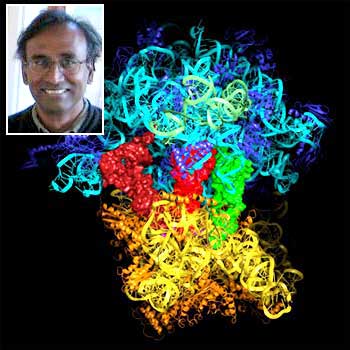
Dr Ramakrishnan - Chemistry Nobel, 2009


Venkatraman Ramakrishnan, Born in 1952 in Chidambaram,Tamil Nadu- a senior scientist at the MRC Laboratory of Molecular Biology at Cambridge, has been awarded the Nobel Prize in Chemistry for 2009 along with Thomas E Steitz (US) and Ada E Yonath (Israel) for their "studies of the structure and function of the ribosome". three Laureates have all generated 3D models that show how different antibiotics bind to the ribosome. These models are now used by scientists to develop new antibiotics, directly assisting the saving of lives and decreasing humanity's suffering


S Chandrasekhar - A very good teacher , he considered teaching is a life time mission.


Chandrasekhar Subramanyan’s most famous discovery was the astrophysical Chandrasekhar limit. The limit describes the maximum mass (~1.44 solar masses) of a white dwarf star, or equivalently, the minimum mass for which a star will ultimately collapse into a neutron star or black hole following a supernova. The limit was first calculated by Chandrasekhar while on a ship from India to Cambridge, England. The Chandrasekhar Limit led to the determination of how long a star of particular mass will shine. In 1983, Chandrasekhar Subramanyan got the Nobel Price for this discovery.

Two of Chandrasekhar's students in 1947 were the doctoral candidates Tsung-Dao Lee and Chen Ning Yang in Particle Physics research. Even though Chandrasekhar Subramanyan maintained his office at the Yerkes Observatory in Lake Geneva, Wisconsin, he would regularly drive the one hundred miles to Chicago to guide and teach Lee and Yang and others many a times in difficult weather conditions. In 1957, these two of his students won the Nobel Prize in Physics for their work in particle physics research. This also brings out Chandrasekhar Subramanyan’s commitment to science and there by to his students. Science indeed is a life time mission for Chandrasekhar. It is this characteristic which makes youth to become passionate towards science.

“Five Minds for the Future” written by Howard Gardner.

“Five Minds for the Future” written by Howard Gardner.
Sulekha Rani.R, P.G.T Chemistry, KV NTPC Kayamkulam

1. Disciplinary mind: Disciplinary minds require the mastery of major schools of thought that may include science, mathematics, history and religion. Apart from this the disciplinary mind has to be enriched with expertise in at least one professional field. Research confirms that it takes up to 10 years to master a discipline. This mind also knows how to work steadily overtime to improve skill and understand.


2.Synthesizing mind: What is needed is the ability to integrate ideas from different disciplines or spheres into an integrated system and communicate the synthesized thoughts. With the increasing volume of information in the present day world, capacity to synthesize assumes great importance.


3. Creating mind: It is essential to build capacity to uncover and create solutions to new problems, questions and phenomena. For examples on creativity, in general we look for leaders, rather than managers.


It puts forth new ideas, poses, familiar questions and arrives at unprecedented answers. The creating mind seeks to remain at least one step ahead of even the most sophisticated computers and robots. I understand that most of the computers of the future and accessories will be micro sized, wearable and will have wireless communication with each other. Moderately priced PCs capable of performing about a billion calculations per second today will be able to perform about a trillion calculations per second within next 10 years. It is predicted that by 2019, the computational ability of an ordinary PC would exceed the capability of human brain. By 2029, the capability of a normal PC would be around 1000 times that of the human brain. My view is that definitely the creating mind of the human being will always be superior to the most powerful computers in the horizon.


4.Respectful mind: It is a uniquely developed mind, a mature mind that has awareness and appreciation for differences among human beings. The capacity built in the respectful mind, leads to understand other persons on their own terms with mutual trust. In the world where we are, all interlinked and need to maintain working relationship, intolerance is no longer a viable option.


5. Ethical mind: It is indeed a built-in-capacity for fulfilling once responsibility as a worker and as a citizen simultaneously, It will essentially lead to “work with integrity and succeed with integrity”.

The mind conceptualizes how workers can serve purpose beyond self interest and how citizens can work unselfishly to improve the lot of all. The ethical mind then acts on the basis of these analyses. In the present scenario, the need for respecting mind and ethical mind is very important, because many of the societal problems today are arising out of lack of consideration for others and overwhelming selfishness of the individual. The education system has to cultivate these minds among the youth, so that they learn to respect others, are tolerant and perseverant for realizing their goals in life.

Inspiring Thoughts By Dr.APJ Abdulkalam

Inspiring Thoughts by Dr. APJ Abdulkalam

Sulekha Rani.R, P.G.T Chemistry, KV NTPC Kayamkulam

1. What was thought
impossible has happened
and what is thought possible
has not yet happened
but it certainly will happen
.


2. The education system has a
tremendous responsibility to
transform a child into a
leader- the transformatino from
‘what can you do for me’ to
‘what can i do for you’.

3. Conscience is a great
ledger where our offences
are booked and registered
.

4. Hard work and perseverance
are beautiful angels who will
reside on your shoulders.

5. An ignited mind is the
most powerful resource
on the earth,
above the earth and
under the earth.

6. Education and values
imparted in childhood are
more important than the
education received in college
and university.

7. Teachers themselves should
Be lifelong learners.

8. Teachers have a great
Mission to ignite the minds
of the young.

9. A teacher has to
create a lifelong
autonomous learner.

10. A teacher’s life lights
Many lamps.

11. Science is all about
asking questions and
finding the right
answers through hard
work and research into
laws of nature.

12. Give one hour a day
exclusively for book reading and
in a few years you will become a
knowledge centre


Sunday, May 8, 2011

New Material Derived From Graphene May Have Many Applications In Future Electronics

Sulekha Rani.R, P.G.T Chemistry,KV NTPC Kayamkulam

(Graphane crystal. This novel two-dimensional material is obtained from graphene (a monolayer of carbon atoms) by attaching hydrogen atoms (red) to each carbon atoms (blue) in the crystal. (Credit: Image courtesy of University of Manchester)

— Researchers at The University of Manchester have produced a ground-breaking new material, graphane, which has been derived from graphene.


Graphene, which was discovered at the University in 2004, is a one-atom-thick crystal with unusual highly conductive properties, which has quickly become one of the hottest topics in physics and materials science. It is also tipped for a number of future applications in electronics and photonics.

But research published January, 30, 2009 by Professor Andre Geim and Dr Kostya Novoselov, who led the group that discovered graphene in 2004, suggests its uses could be far greater.

That's because the scientists, from the University’s School of Physics and Astronomy, have found that graphene will react with other substances to form new compounds with different properties - opening up further opportunities for development in the field of electronics.

As part of the research, published in the journal Science, Professor Geim and Dr Novoselov have used hydrogen to modify highly conductive graphene into a new two-dimensional crystal - graphane.

The addition of a hydrogen atom on each of the carbon atoms in the graphene achieved the new material without altering or damaging the distinctive one-atom-thick ‘chicken wire’ construction itself.

But instead of being highly conductive, like graphene, the new substance graphane has insulating properties.

The researchers say the findings demonstrate that the material can be modified using chemistry - clearing the way for the discovery of further graphene-based chemical derivatives.

“Graphene is an excellent conductor and is tipped for many electronic applications,” said Dr Novoselov. “However it was tempting to look at ways to gain additional control of its electronic properties through the use of chemistry.

“Our work proves that this is a viable route and hopefully will open the floodgates for other graphene-based chemical derivatives. This should widen the possible applications dramatically.”

The unique electronic properties of graphene have already led researchers to look at ways the material could be used in the development of increasingly small and fast transistors. However, the absence of the energy gap in the electronic spectra forced scientists to use rather complex graphene-based structures like quantum point contacts and quantum dots for this purpose.

The discovery that graphene can be modified into new materials, fine tuning its electronic properties, has opened up the increasingly rich possibilities in the development of future electronic devices from this truly versatile material.

Professor Geim said: “The modern semiconductor industry makes use of the whole period table: from insulators to semiconductors to metals.

“But what if a single material is modified so that it covers the entire spectrum needed for electronic applications?

“Imagine a graphene wafer with all interconnects made from highly conductive, pristine graphene whereas other parts are modified chemically to become semiconductors and work as transistors.”

The Manchester researchers produced high-quality crystals of graphane by exposing pristine graphene to atomic hydrogen. The approach shows a way of making many other ultra-thin crystalline materials based on graphene


Scientists Strive to Replace Silicon With Graphene on Nanocircuitry


Sulekha Rani.R , P.G T Chemistry, K V NTPC kayamkulam

(In a technique known as thermochemical nanolithography, the tip of an atomic force microscope uses heat to turn graphene oxide into reduced graphene oxide, a substance that can be used to produce nanocircuits and nanowires with controllable conductivity. (Credit: University of Illinois at Urbana-Champaign)


Scientists have made a breakthrough toward creating nanocircuitry on graphene, widely regarded as the most promising candidate to replace silicon as the building block of transistors. They have devised a simple and quick one-step process based on thermochemical nanolithography (TCNL) for creating nanowires, tuning the electronic properties of reduced graphene oxide on the nanoscale and thereby allowing it to switch from being an insulating material to a conducting material.


The technique works with multiple forms of graphene and is poised to become an important finding for the development of graphene electronics. The research appears in the June 11, 2010, issue of the journal Science.


Scientists who work with nanocircuits are enthusiastic about graphene because electrons meet with less resistance when they travel along graphene compared to silicon and because today's silicon transistors are nearly as small as allowed by the laws of physics. Graphene also has the edge due to its thickness -- it's a carbon sheet that is a single atom thick. While graphene nanoelectronics could be faster and consume less power than silicon, no one knew how to produce graphene nanostructures on such a reproducible or scalable method. That is until now.


"We've shown that by locally heating insulating graphene oxide, both the flakes and epitaxial varieties, with an atomic force microscope tip, we can write nanowires with dimensions down to 12 nanometers. And we can tune their electronic properties to be up to four orders of magnitude more conductive. We've seen no sign of tip wear or sample tearing," said Elisa Riedo, associate professor in the School of Physics at the Georgia Institute of Technology.

On the macroscale, the conductivity of graphene oxide can be changed from an insulating material to a more conductive graphene-like material using large furnaces.

Now, the research team used TCNL to increase the temperature of reduced graphene oxide at the nanoscale, so they can draw graphene-like nanocircuits. They found that when it reached 130 degrees Celsius, the reduced graphene oxide began to become more conductive.


"So the beauty of this is that we've devised a simple, robust and reproducible technique that enables us to change an insulating sample into a conducting nanowire. These properties are the hallmark of a productive technology," said Paul Sheehan, head of the Surface Nanoscience and Sensor Technology Section at the Naval Research Laboratory in Washington, D.C.

The research team tested two types of graphene oxide -- one made from silicon carbide, the other with graphite powder.


"I think there are three things about this study that make it stand out," said William P. King, associate professor in the Mechanical Science and Engineering department at the University of Illinois at Urbana-Champaign. "First, is that the entire process happens in one step. You go from insulating graphene oxide to a functional electronic material by simply applying a nano-heater. Second, we think that any type of graphene will behave this way. Third, the writing is an extremely fast technique. These nanostructures can be synthesized at such a high rate that the approach could be very useful for engineers who want to make nanocircuits."


"This project is an excellent example of the new technologies that epitaxial graphene electronics enables," said Walt de Heer, Regent's Professor in Georgia Tech's School of Physics and the original proponent of epitaxial graphene in electronics. His study led to the establishment of the Materials Research Science and Engineering Center two years ago. "The simple conversion from graphene oxide to graphene is an important and fast method to produce conducting wires. This method can be used not only for flexible electronics, but it is possible, sometime in the future, that the bio-compatible graphene wires can be used to measure electrical signals from single biological cells."


Friday, May 6, 2011

An inspirational speech BY APJ

Why are we
in India
so embarrassed to recognize our own strengths, our achievements?

We are such a great nation. We have so many amazing success stories but we
refuse to acknowledge them. Why?

We are the first in milk production.

We are number one in Remote sensing satellites.

We are the second largest producer of wheat.

We are the second largest producer of rice.

Look at Dr. Sudarshan , he has transferred the tribal village into a
self-sustaining, self-driving unit. There are millions of such achievements but
our media is only obsessed in the bad news and failures and disasters.

I was in Tel Aviv once and I was reading the Israeli newspaper. It was the day
after a lot of attacks and bombardments and deaths had taken place. The Hamas
had struck. But the front page of the newspaper had the picture of a Jewish
gentleman who in five years had transformed his desert into an orchid and a
granary. It was this inspiring picture that everyone woke up to. The gory
details of killings, bombardments, deaths, were inside in the newspaper, buried
among other news.

In India we only read about death,
sickness, terrorism, crime.. Why are we so NEGATIVE? Another question: Why are
we, as a nation so obsessed with foreign things? We want foreign T.Vs, we want
foreign shirts. We want foreign technology.


Why this obsession with
everything imported. Do we not realize that self-respect comes with
self-reliance? I was in
Hyderabad
giving this lecture, when a 14 year old girl asked me for my autograph. I asked
her what her goal in life is. She replied: I want to live in a developed
India
. For her, you and I will have to build this developed
India . You must proclaim. India
is not an under-developed nation; it is a highly developed nation.


YOU say that
our government is inefficient.

YOU say that our laws are too old.

YOU say that the municipality does not pick up the garbage.

YOU say that the phones don't work, the railways are a joke. The airline is the
worst in the world, mails never reach their destination.

YOU say that our country has been fed to the dogs and is the absolute pits.


YOU say, say and say. What do
YOU do about it?


Take a person on his way to Singapore.
Give him a name - 'YOURS'. Give him a face - 'YOURS'. YOU walk out of the
airport and you are at your International best. In
Singapore you don't throw cigarette
butts on the roads or eat in the stores. YOU are as proud of their Underground
links as they are. You pay $5 (approx. Rs. 60) to drive through Orchard Road
(equivalent of Mahim Causeway or Pedder Road) between 5 PM and 8 PM. YOU come
back to the parking lot to punch your parking ticket if you have over stayed in
a restaurant or a shopping mall irrespective of your status identity In
Singapore
you don't say anything, DO YOU? YOU wouldn't dare to eat in public during
Ramadan, in
Dubai
. YOU would not dare to go out without your head covered in Jeddah.

YOU would not dare to buy an employee of the telephone exchange in London at 10
pounds (Rs.650) a month to, 'see to it that my STD and ISD calls are billed to
someone else.'YOU would not dare to speed beyond 55 mph (88 km/h) in Washington
and then tell the traffic cop, 'Jaanta hai main kaun hoon (Do you know who I
am?). I am so and so's son. Take your two bucks and get lost.' YOU wouldn't
chuck an empty coconut shell anywhere other than the garbage pail on the beaches
in
Australia and New Zealand
.

Why don't YOU spit Paan on the streets of
Tokyo?
Why don't YOU use examination jockeys or buy fake certificates in
Boston??? We are still
talking of the same YOU. YOU who can respect and conform to a foreign system in
other countries but cannot in your own. You who will throw papers and
cigarettes on the road the moment you touch Indian ground. If you can be an
involved and appreciative citizen in an alien country, why cannot you be the
same here in
India?

In an interview, the famous
Ex-municipal commissioner of
Bombay,
Mr. Tinaikar, had a point to make. 'Rich people's dogs are walked on the
streets to leave their affluent droppings all over the place,' he said. 'And
then the same people turn around to criticize and blame the authorities for
inefficiency and dirty pavements. What do they expect the officers to do? Go
down with a broom every time their dog feels the pressure in his bowels?

In
America
every dog owner has to clean up after his pet has done the job. Same in
Japan.

Will the Indian citizen do that here?' He's right. We go to the polls to choose
a government and after that forfeit all responsibility.

We sit back wanting to be pampered and expect the government to do everything
for us whilst our contribution is totally negative. We expect the government to
clean up but we are not going to stop chucking garbage all over the place nor
are we going to stop to pick a up a stray piece of paper and throw it in the
bin. We expect the railways to provide clean bathrooms but we are not going to
learn the proper use of bathrooms.

We want Indian Airlines and Air
India
to provide the best of food and toiletries but we are not going to stop
pilfering at the least opportunity.

This applies even to the staff who is known not to pass on the service to the
public.


When it comes to burning social
issues like those related to women, dowry, girl child! and others, we make loud
drawing room protestations and continue to do the reverse at home. Our excuse?
'It's the whole system which has to change, how will it matter if I alone
forego my sons' rights to a dowry.' So who's going to change the system?

What does a system consist of? Very conveniently for us it consists of our
neighbours, other households, other cities, other communities and the
government. But definitely not me and YOU. When it comes to us actually making
a positive contribution to the system we lock ourselves along with our families
into a safe cocoon and look into the distance at countries far away and wait
for a Mr.Clean to come along & work miracles for us with a majestic sweep
of his hand or we leave the country and run away.

Like lazy cowards hounded by our fears we run to
America to bask in their glory and
praise their system. When
New York becomes
insecure we run to
England
. When
England
experiences unemployment, we take the next flight out to the Gulf. When the
Gulf is war struck, we demand to be rescued and brought home by the Indian
government. Everybody is out to abuse and rape the country. Nobody thinks of
feeding the system. Our conscience is mortgaged to money.


Dear Indians, The article is
highly thought inductive, calls for a great deal of introspection and pricks
one's conscience too . I am echoing J. F. Kennedy's words to his fellow
Americans to relate to Indians ..


'ASK WHAT WE CAN DO FOR INDIA AND DO WHAT HAS TO BE DONE TO MAKE INDIA WHAT AMERICA AND OTHER WESTERN COUNTRIES
ARE TODAY'


Lets do what India
needs from us.


Jai Hind